Marketing & Sales Management
How to Create an Effective Marketing Strategy for Your Business

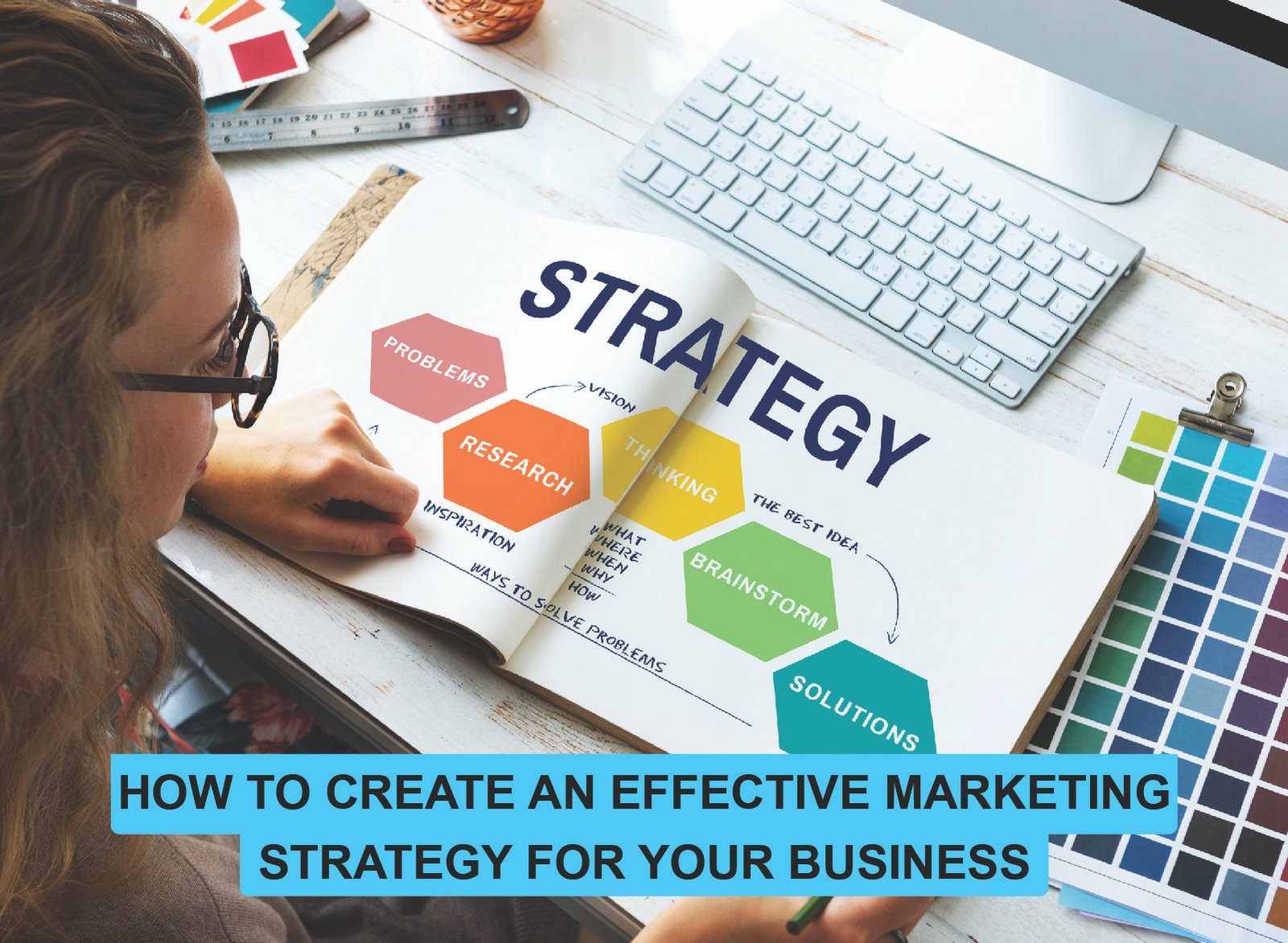
To have a good business, it all begins with an effective marketing strategy. As your business grows and faces the challenges of starting up or rebranding, knowing how to create a strategic marketing strategy is crucial to differentiate and propel the business. To have a good business, it all begins with an effective marketing strategy. The current competitive environment offers no mercy to makers of really good products or services, and that is not enough nowadays to market a product effectively but it is better to have a strategy that will ensure reaching the target audience, highlighting the value of a product and sustaining relationships with customers.
As a new business owner, you might have come across a dreamy idea of starting a business that one can be excited about, or you might be at that stage of your business when you think about renewing an existing brand. In any case, there is the necessity to understand how to build a successful marketing strategy in this business.
An effective marketing strategy will guide you on what you need to achieve, who your market is and how to reach the audience through the right channels. It makes sure your work is coherent, trackable and is oriented at sustainable development. Devoid of a strategy, marketing can end up as haphazardly as it does a waste of time and funding. This blog will take you through how to influence key factors of an effective marketing strategy- market research and target audience, content planning and performance tracking. There you will also find useful tips, tools, and pitfalls, as well as never implementing a strategy that will really bring results.
Be it a small time business owner, a marketer, or even a businessman, the art of strategic marketing will enable your brand to perform well and compete with dexterity. It is time to get your business the attention it deserves.
Understanding the Basics
A good marketing strategy will develop once the basics have been well understood. Strategic marketing is not all about promoting your business but it is also about how you can align your objectives as a business to the needs of your customer and the potential markets. Begin by carrying out extensive market research so as to get information on the industry trends, competitors and customer behavior. Strictly identify your target audience, in terms of demographics, interests, and suffering points. Write down SMART (Specific, Measurable, Achievable, Relevant, Time-bound) goals so that your work would be concentrated and quantifiable. In establishing this foundation, you do yourself a favor of creating an informed decision-making environment, resource optimization, and persistent growth by having a concentrated, results-based model.
What Is a Marketing Strategy?
- The detailed description of what marketing strategy is and how it is compatible with the objectives of your business.
- A marketing plan is like a roadmap of your business because it defines how you will actually target and communicate with your audience in business to meet certain business goals. It involves numerous strategies and mediums and all of them operate together.
- This strategic plan is aligned with your business objectives which means that the marketing activities will feed to the company vision and the financial objectives in a direct manner. It gives a point of reference in uniform and dedicated marketing activities.
Why Your Business Needs One
- Describes the vitality of strategic marketing planning to a sustainable growth and competitive advantage.
- An effective marketing plan will give direction and focus and it does not allow the wastage of resources on some ineffective strategies. It can be planned instead of reacting to the changes in the market.
- Strategic marketing planning is necessary because of the desire to make a sustainable growth through creation of brand awareness, customer acquisition and customer loyalty. It is also relevant towards creating a competitive edge through the differentiation of your offerings at the market.
The Role of Market Research
- Includes the aspect of market research being the building block of any successful marketing plan.
- Market research is the process of the precise collection, examination, and analysis of information regarding your target audience, opponents, and the general situation in the industry. It also is a source of good information on customer needs, preferences and behaviours.
- This type of research makes a sound foundation of the marketing strategy as it guides judgment for the development of products, pricing, promotion and distribution. It will only focus advertising on a poorly directed future.
Identifying Your Target Audience
- Describes methods of defining and identifying your dream customer.
- Get to know who your ideal customer is by narrowing down to their demographic profile (age, location, income), psychographics (interests, values, lifestyle) as well as their purchasing behaviors. This draws a clear image about who you are targeting.
- Some of the ideas that you can use to identify your target audience are market segmentation, surveys, and examination of the available customers data. The extensive understanding can identify where to message differently, and how to select the channel and have a maxima effect on marketing.
Setting SMART Goals
- A deconstruction of how to set the Specific, Measurable, Achievable, Relevant, and Time-bound goals.
- SMART goals offer a perfect guideline in terms of marketing objectives definition. They make sure that your objectives comply with the acronym SMART, that is Specific (a clearly defined), Measurable (quantifiable), Achievable (realistic), Relevant (in line with business objectives), and Time-bound (with a deadline).
- This is possible by creating SMART goals that would allow you to monitor the progress of work, check whether your marketing activities are successful, and make the required adjustments on the way. A systematic procedure enhances an improved chance at success in terms of marketing results.
Step-by-Step Guide
The process of creating an effective marketing strategy is a planned one which requires a deep understanding of where you are, clear identification of what and why you are different, prioritizing your best channels of focus, and spending your money. More importantly, it requires constant evaluation of your performance based on critical measures which give you an opportunity to make necessary changes on the fly to improve your strategy and continually succeed in a fast-paced market environment.
Analyze Your Current Position
- Advice on how to evaluate your brand and SWOT analysis and your existing market position.
- The first step should be to thoroughly examine your current brand identity, image, and performance as a whole in the market. This entails analysing your strengths and weaknesses in comparison to competitors.
- Carrying out a SWOT (Strengths, Weaknesses, Opportunities, and Threats) analysis is a good step of helping you to have the proper structure in knowing what you are good at and what is happening in the market. It is an important analysis that is self-crucial and dictates the creation of manageable and operable strategies.
Define Your Unique Value Proposition (UVP)
- Advice on how to define the aspects of what makes your business unique.
- Your Unique Value Proposition (UVP) is a simple and concise statement that will convey the unique advantages that your company brings to the table and why customers should give you a choice (rather than your competitors). It points at the things that distinguish you and that are superior.
- To express your UVP you need to have profound knowledge about the needs and pain points of your target audience and also understand clearly about your competition. An effective UVP appeals to a prospective customer and becomes the heart of your communication.
Choose the Right Marketing Channels
- Abrief summary of the choice between digital and traditional and hybrid approaches.
- Promotional channels- This entails the choice of the promotional media through which you reach your target market. Here, you need to consider where your target is spending its time and through which media you reach them best. This may involve online media such as social media, search engine optimization and email promotion.
- The more conventional media, i.e., print, radio, television, can also apply according to your target demographic. Combined approach of digital and traditional tools can be the most effective in broad reaching and engaging people.
Allocate Your Budget Wisely
- Resource plan and money to be allocated strategies in line with your objectives.
- To have an effective budget allocation, you need to align your money with your marketing objectives and focus it on the activities that will probably yield the best value of the money you put into it. This entails planning and budgeting of the costs on various channels.
- Be cost-effective by considering the value of different marketing tactics, spend money and keep up with it, in order not to keep beyond your budget. Assess and re-evaluate your budgetary allocation and learn to manage every bit of resource to your advantage and ensure that every penny invested in your marketing has maximum power.
Monitor, Measure, and Adjust
- The best ways to improve on your strategy using KPIs and analytics tools.
- It is important to apply Key Performance Indicators (KPIs) to monitor the development and efficiency of your marketing. These metrics give measurable information concerning such parameters as the amount of traffic in the websites, the generation of leads, the conversion, and customer interaction.
- Analysis tools help to track and analyze information to get an idea of what is going well and what is not. Quickly assessing your performance records allows you to make relevant changes to your actions and plans in order to keep improving.
Advanced Tips and Strategies
To grow beyond the basics, it is always good to use a more advanced technique that will enlarge your marketing effects. These consist of the strategic use of content to build thought leadership and greater links with your customers and the strength of automation and artificial intelligence to individualize experiences, and the need to deliver a harmonious brand experience wherever the customer interfers through omnichannel integration. Moreover, you should consider partnering with the influencers and affiliates, which can help to extend your audience and rapport extensively, whereas a competently designed branding plan can further establish the basis of sustainable customer reputation and long-term prosperity.
Leveraging Content Marketing
- Discuss the role of the content in authority, trust and engagement.
- Content marketing is the aspect of developing and sharing valuable, relevant and consistent content to appeal to a clearly defined audience and, ultimately, induce profitable customer activity. This may involve blog articles, videos, infographics and ebooks.
- This strategy gives you opportunities to build a reliable brand in your field by regularly delivering high-quality content that appeal to the needs and interests of your audience. This fosters interest, creates trust and eventually, organic traffic and leads to your business.
Embracing Automation and AI
- Summary of personalization and AI-based marketing automation tools.
- Marketing automation tools take the tedious job of email marketing, posting to social media, and nurturing leads out of your hands so that your team can get on to other more valued activities. This makes it more efficient and also enables a personal interaction with the customer in larger volumes.
- Advanced personalization is driven by artificial intelligence (AI) that scrutinizes large quantities of customer data to provide the pertinent content, product suggestions and customer service. This may greatly improve customer experience and lead to conversion rates.
Omnichannel Integration
- Things to consider when providing a perfect customer experience at various contact points.
- In taking this approach, omnichannel marketing caters to ensuring that a brand experience is seamless and uniform across the various channels your customers use, be it your online store, social media, email, shops and even customer care.
- By adding those touchpoints, you make sure that your customers will have a unified experience, and thus, they will be able to use your brand without any problems. Such a consistent experience will help create brand loyalty, and rise customer-satisfaction.
Influencer and Affiliate Marketing
- Utilizing third party sources to gain popularity and influence.
- Influencer marketing is the process of involving a person with a large and active following that you are interested in your niche. These influencers may be able to recommend your products or services to their followers, whose eyes have been opened via such an endorsement.
- Performance-based A performance-based strategy in which you recruit individuals or businesses (affiliates) to promote your products or services through their web sites and you pay them a commission based on how many sales or leads they send your way. This is an efficient method of realizing traffic and sales at a lower cost.
Strategic Branding for Long-Term Impact
- Development of an emotional brand that would appeal to your customers.
- Strategic branding is more than the graphics and name; that is the whole feeling (nebulous or not) your audience has about your business. It is all about how you establish your brand values, personality and message and make it connect well with your target market.
- Create an excellent brand that can generate positive emotions and support the values you hold as a group will strengthen long-term loyalty and patronage by your audience to be an advocate. The attachment can be used as a competitive advantage over others in the market and it can bring about a competitive advantage in the market.
Common Mistakes to Avoid When
Marketing strategy is not something that is simple to create and there are a number of faux-pas that you will need to avoid in order to succeed. Validation and dismissal of the important lessons presented by data and analytics may result in erroneous decision-making, whereas a lack of great understanding and focus on your target group only makes you waste on irrelevant correspondence. Reckless copying of other companies kills your brand personality; improper use of budget can end up draining funds, without getting positive results. And last but not the least, inconsistent messages harm your brand trust and introduce confusion to people who may become your customers, in the end, weakening your strategy.
Ignoring Data and Analytics
- Complications of decision-making that lacks support with data.
- Engaging in marketing without using analyses and statistics is similar to travelling without a map. You will be at the risk of investing in substandard channels and tactics, overlook optimization, and customer behavior.
- Such data-driven insights as analytics on the performance of the web sites and social media, as well as the performance of the campaigns, will serve as equally essential feedback data on what works and what does not. Otherwise, the cost in resources and the general marketing strategy will be less effective.
Not Understanding Your Audience
- Penalties of unclear or improper targeting.
- One of the main errors that could be made in marketing is creating a strategy, but sparing no thoughts concerning the needs, likes and dislikes, pain areas, and purchasing habits of your target demographics. General or inaccurate targeting provides irrelevancy in the message that cannot be felt.
- When you are just not aware of the identity of the person you are talking to, chances are your experiments in marketing will fail. Extensive research on the audience is very important when developing effective and appealing campaigns that could produce outcomes by investing time and resources in the audience research.
Copying Competitors Blindly
- Why imitation may hinder instead of assisting your brand.
- Although it is good to be conscious about what other players in the market are doing, blindly pulling out their ideas might be counterproductive because you need to pitch with what makes you different to appeal to your potential customers. What may be working in one business might not work in the other.
- Blind imitation kills democracy and likewise you will not be able to distinguish your brand in the market. Emphasis on improvement of your own unique advantage, the strategies adopted in specific relation to your goals and clients in business.
Poor Budget Allocation
- The harms that are common in planning and ranking of resources.
- Unproductive planning and prioritisation of resources may restrain the influence of your marketing strategy drastically. The problem most people fall in the trap regarding the budget is by spreading it so thin in too many directions or investing too much in areas that are not performing well.
- Strategic allocation of the budget means putting emphasis on those channels and strategies that can best reach your target and attain your marketing goals. Reviewing and updating your budget to reflect performance statistics on a regular basis is the key to controlling ROI.
Lack of Consistent Messaging
- The way message or voice inconsistency discredits brand trust.
- Brand voice, appearance, or general message that is not cloud across all channels of marketing can also get confusing and lead to loss of brand trust. It is not easy for potential customers to know and associate themselves with your brand because of a disjointed experience.
- Having a consistent brand message with a consistent brand identity at each and every point of contact aids in establishing brand recognition, enhancing your brand identity and instilling trust and credibility into your target audience. Such coordinated effort is essential towards the long-term success of the marketing effort.
Tools and Resources to Support
The challenges of designing an efficient marketing strategy and proceeding with it can be overcome with the help of numerous tools and resources that can eliminate confusion and help an individual navigate through the issue. Everything you need to be more productive and efficient in a content creation and campaign management process, as well as proper performance analytics suite that gives you essential performance data to optimize your performance in all the related areas, the proper tools can make a massive impact. Moreover, the continuous learning can be achieved by continuously investing in educational materials and certifications to ensure that your related knowledge levels are up to date and competitive on the continuously changing marketing environment.
Best Free and Paid Marketing Tools
- The most popular platforms such as HubSpot, SEMrush, Canva, and so on.
- There are a lot of marketing tools which can be used on different needs and different budgets. Off-the-shelf platforms such as HubSpot exist, usually with free versions that are appropriate to startup and small companies, and provide an entire marketing automation, CRM, and sales solution.
- SEMrush is an efficient paid SEO and competitive analysis tool, which shows good results in terms of keyword research and competitor plans. Canva also provides easy-to-use design tools to make the marketing materials attractive, and these tools are both free and premium.
Analytics and Reporting Tools
- The process of tracking performance using Google Analytics, Hotjar among others.
- Google Analytics is a basic no-cost instrument that tracks the traffic on websites, user actions as well as the campaigns. It is the most priceless information on the way the visitors respond to what you offer online and how successful your promotional activities are.
- Hotjar provides details of user experience such as heatmaps, session records and feedback questions to make you aware of how people are indeed using your site. These analytics tools are imperative to make decisions that are based on data and do continuous optimization.
Project and Campaign Management Software
- Trello, Asana and other workflow-management tools to organize marketing.
- Visual and collaborative project management tools such as Trello and Asana offer a strategic and working tool to structure marketing activities, campaigns, and coordination between team members. They allow simplifying work, responsibility distribution, and control of progress.
- These project management tools help to increase the productivity of the team and make sure that the marketing activities are performed at high levels in a well- planned and sequenced way, which helps the whole marketing strategy execution process will be more efficient.
Social Media Management Platforms
- The overview of such tools as Hootsuite and Buffer.
- These applications include Hootsuite and Buffer to post on various social sites; they can track any interactions and view the results through the platforms central dashboard. This makes it easy to manage the social media and saves much time.
- These instruments allow regular posting patterns, tracking of audience reactions to the posts and their general performance, which are actually very crucial in developing a potent social media presence and reaching your target audience successfully.
Educational Resources and Certifications
- Minicourses and certification to advance in marketing.
- Many online training and certificates, which are also available on the sites of Coursera, Google, and HubSpot Academy, give detailed information about many facts of marketing, beginning with the basic knowledge in digital marketing and up to such narrow fields as SEO and content marketing.
- Investing in these learning materials will mean that you and your team are kept abreast with the current trends, strategies and approaches in marketing, and hence will increase the capacity to compose and implement effective marketing strategies.
Conclusion:
A powerful marketing program is driven and dynamic. As long as you know who you are talking to, have a defined set of goals and never give up to optimize your efforts over time, your business can attain a competitive advantage and succeed in the long run.
Are you ready to improve your marketing? Sign up with a subscription today to receive tips and templates that should help lead the way.
FAQs:
Q1: What is the duration of making a marketing strategy?
It takes different time, usually 2-4 weeks, but it depends on the complexity of the business.
Q2: Do small corporations have the ability to afford marketing strategy?
Yes! There are numerous instruments and strategies which are affordable and can be scaled.
Q3: How does marketing strategy differ from marketing plan?
The strategy dictates the what and why, the plan how and when.
Q4: Should I have a different online and offline marketing strategy?
Preferably you should incorporate both in your strategy to achieve consistency and reach.
Q5 How frequently must I revise the marketing strategy?
It is advisable that reviews should be carried out quarterly to be sensitive to changes happening in the market.

How to Plan and Manage Business Projects Effectively

Best Practices for Improving Business Operations

How to Create an Effective Marketing Strategy for Your Business

How to Manage a Small Business Efficiently

How to Motivate Employees in a Small Business

Effective Business Management Strategies for Startups
How to Motivate Employees in a Small Business
How to Create an Effective Marketing Strategy for Your Business
Effective Business Management Strategies for Startups
How to Plan and Manage Business Projects Effectively
How to Manage a Small Business Efficiently
Best Practices for Improving Business Operations
How to Plan and Manage Business Projects Effectively
Best Practices for Improving Business Operations
How to Create an Effective Marketing Strategy for Your Business
How to Manage a Small Business Efficiently
How to Motivate Employees in a Small Business
Effective Business Management Strategies for Startups
-
 Leadership & Team Management1 year ago
How to Motivate Employees in a Small Business
-
 General Business Management Tips1 year ago
Effective Business Management Strategies for Startups
-
 Project Management Tips1 year ago
How to Plan and Manage Business Projects Effectively
-
 General Business Management Tips1 year ago
How to Manage a Small Business Efficiently
-
 Operations Management1 year ago
Best Practices for Improving Business Operations


